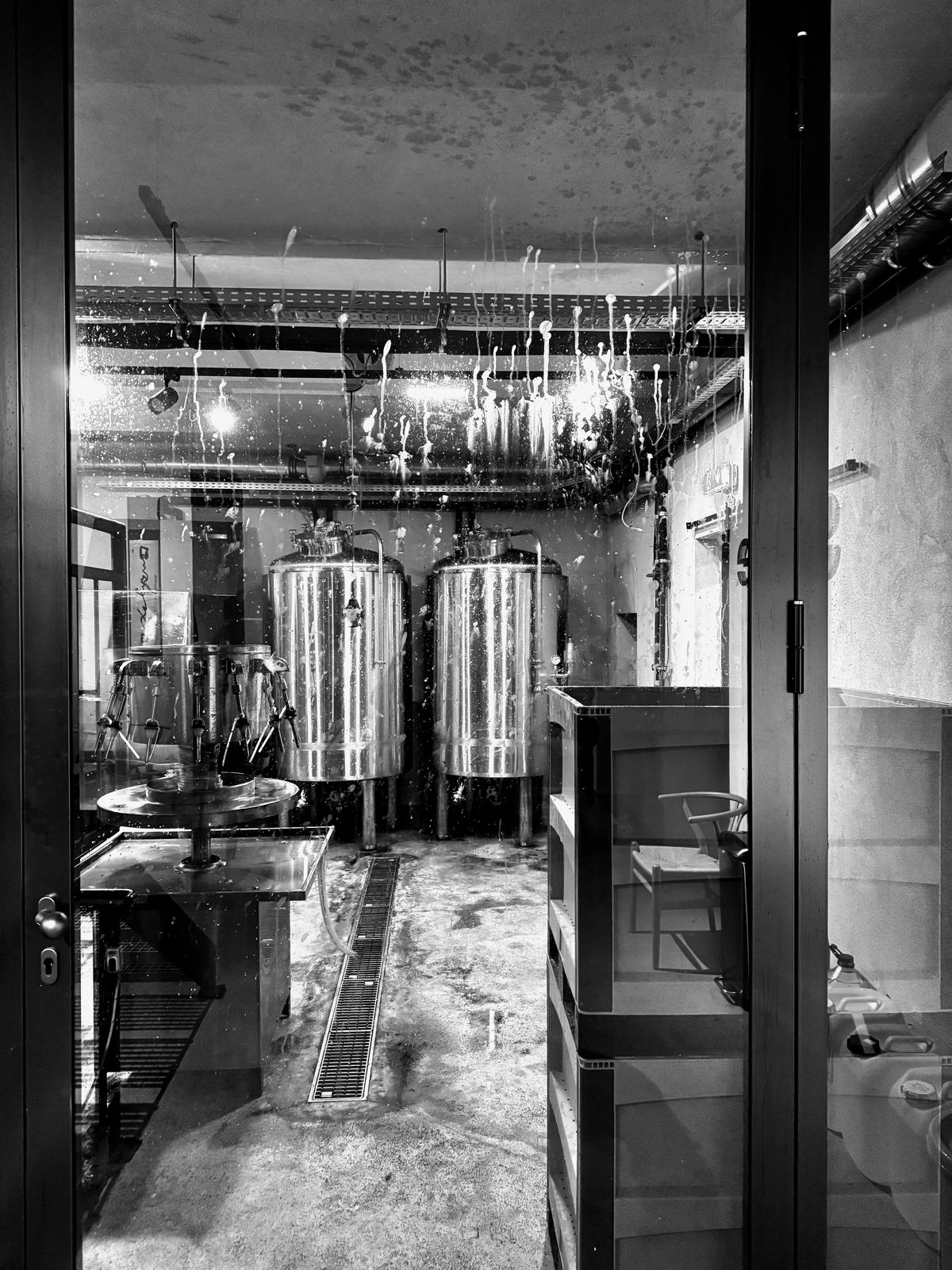
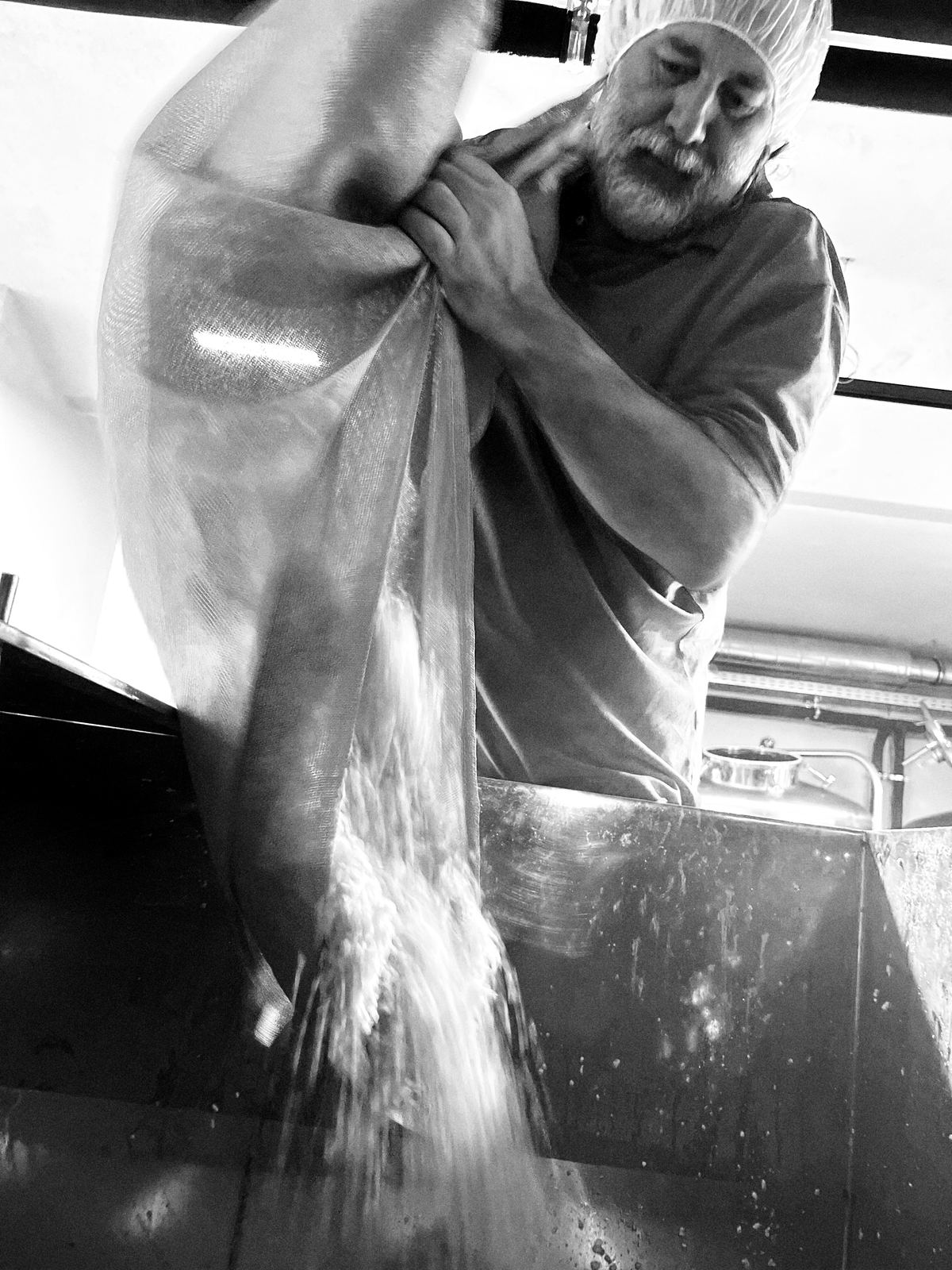
The koji takes two days in the warm room. The fermentation takes weeks in a cold tank. Nothing about this can be rushed, and the sake, not the calendar, decides when it is finished.
That is the part of the craft we were least willing to give up when we brought it to Vienna – and the part the city turned out to understand best.
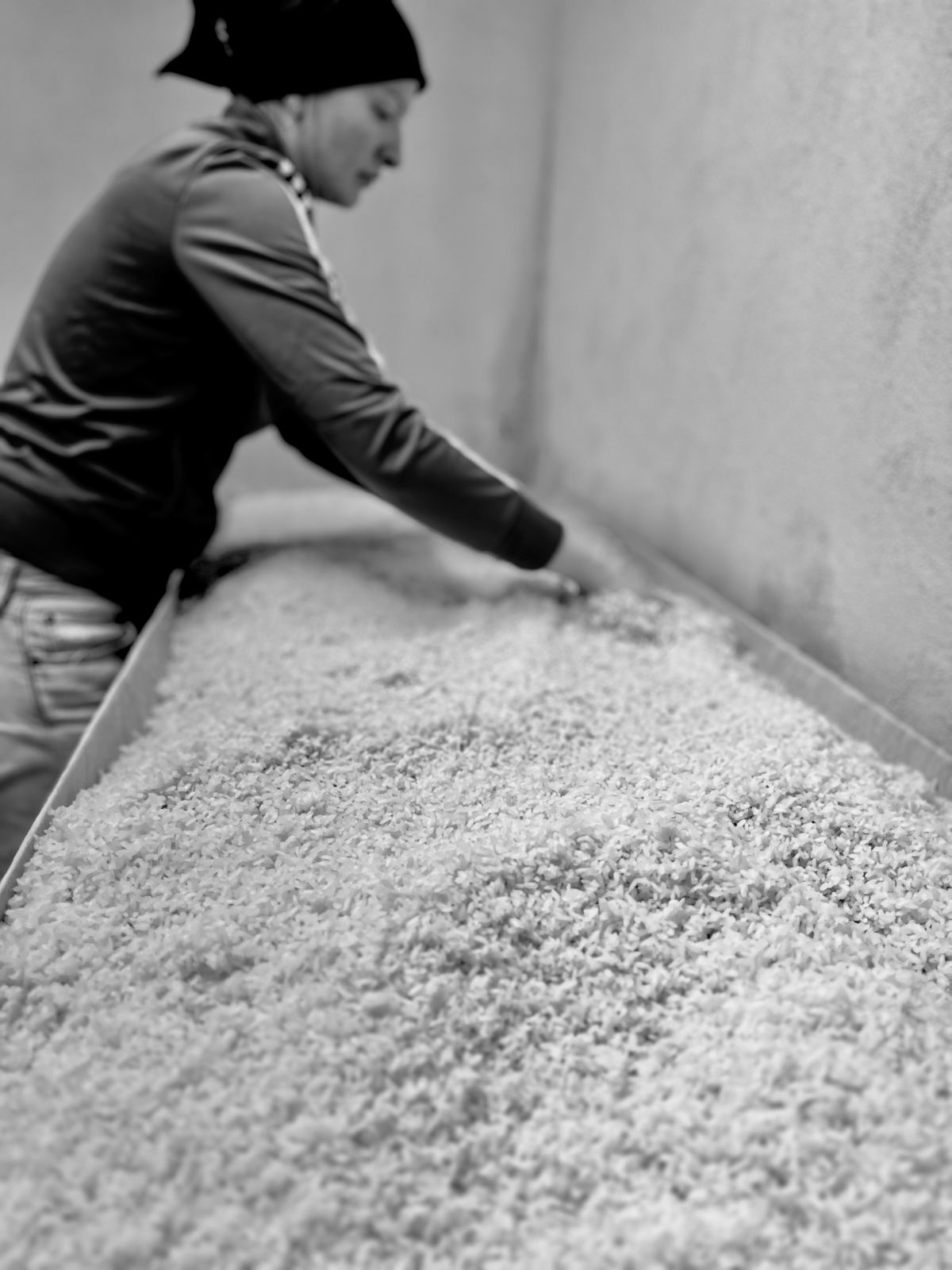
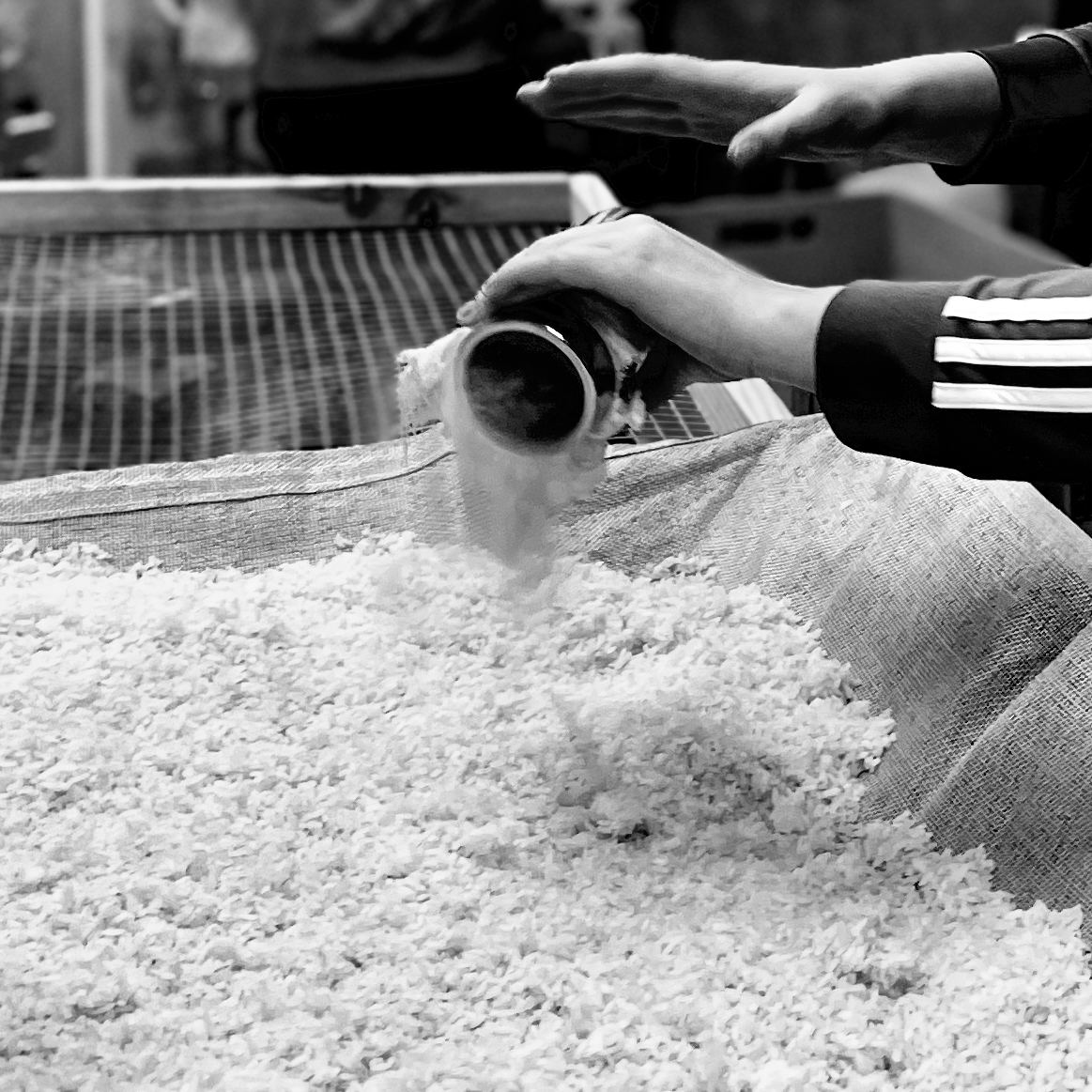
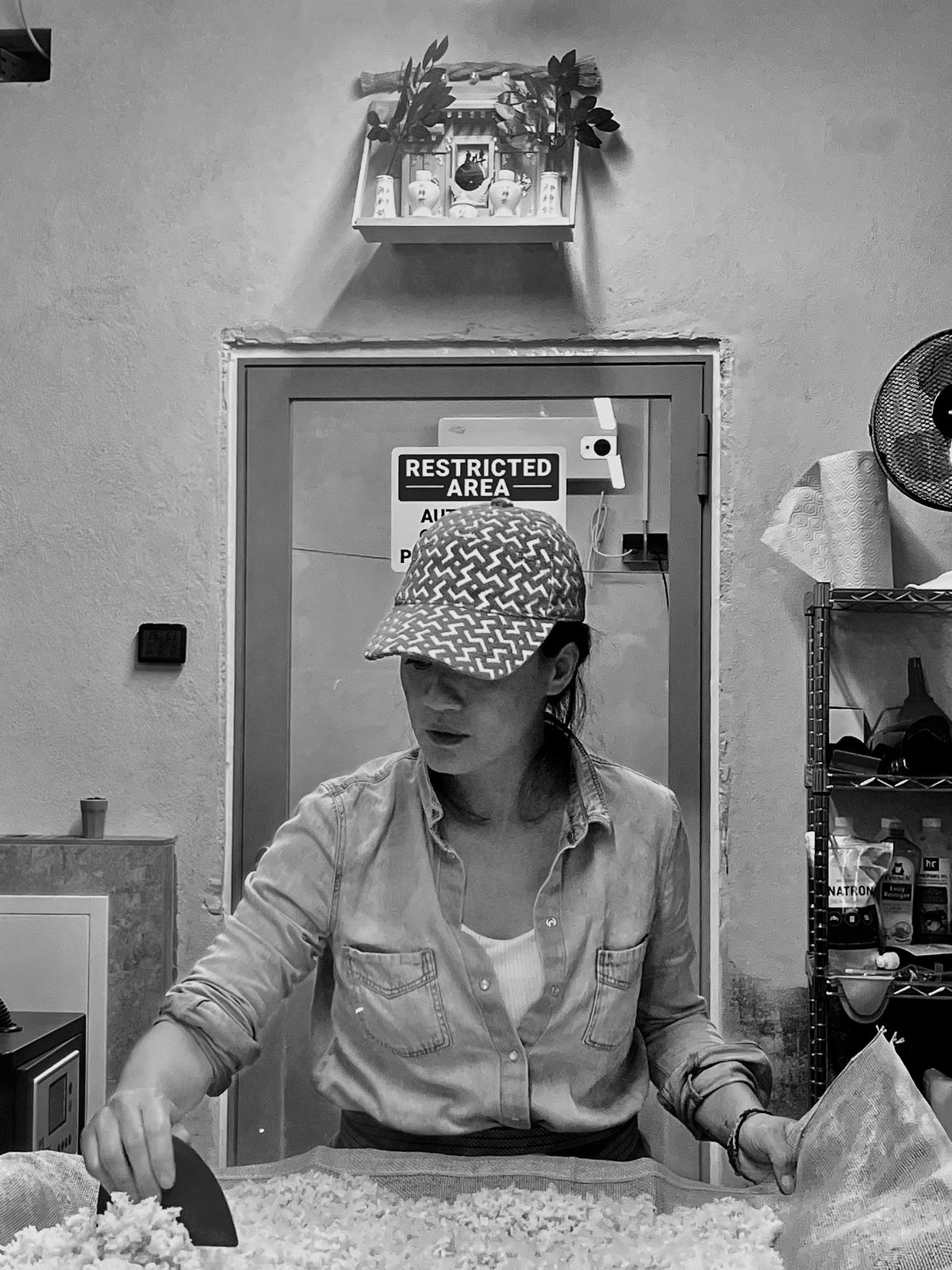
Two days of warmth, a handful of spores, and rice that turns sweet on its own.
No added alcohol, no added sugar, no charcoal filter. What goes into the tank is what ends up in the bottle.
Bio-Arborio and Bio-Selenio, grown organically in Piemonte, a day’s drive south of us. We polish lightly – Kinshachi to 90% – because the flavour we want is in the part most breweries mill away.
01
Wiener Hochquellwasser, carried into the city from the alps since 1873. Soft and low in minerals, it is the reason sake works here at all: Europe has little water this close to Japan’s classic brewing regions.
02
We grow our own Aspergillus oryzae on steamed rice over two days. It converts starch into sugar while the yeast is already at work – the parallel fermentation that exists in no other drink.
03