
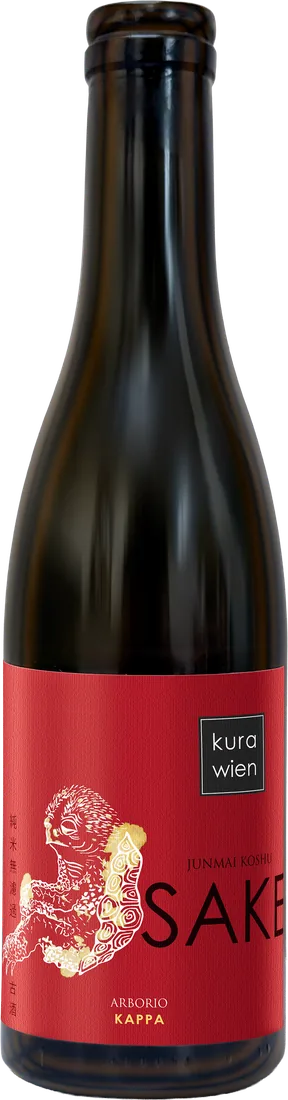
Kappa
Our koshu: a blend of sake aged between three and five years in the cellar. Nothing is added and nothing is taken away – only time, which does more to sake than most people expect.
The colour deepens to amber, the edges soften, and nutty, honeyed, mushroomy notes arrive that no fresh sake has. Low in acidity, long and savoury, and the bottle that rewards a small glass and a slow evening.
Total
€0.00
incl. 20% VATAll prices incl. 20% VAT · free shipping in Austria on orders over €90
What’s inside:
Amber in the glass. Walnut, dried apricot, honey and a mushroomy savouriness, with caramel underneath. Round and low in acidity, long and quietly sweet – the sweetness is the rice’s own, concentrated by time.
Ingredients: water, rice, kōji (Aspergillus oryzae), yeast. 16% vol. 0,375 l. Vegan. Contains alcohol.
At cellar temperature in a small glass, the way an aged sake is drunk in Japan. Warmed gently it opens further and reads almost like an oloroso; over ice it turns into something else again. It sits well with hard cheese, walnuts, mushrooms and anything braised.
Store cool, upright and away from light. It has already spent years doing exactly that, so it is in no hurry; once open, keep it cool and drink it within a month or two.
Contains alcohol. Sold only to persons 18 and over. Please enjoy responsibly.
Most of what we make is drunk young and cold. This was left alone instead. Over three to five years the colour deepens to amber, the edges soften, and nutty, honeyed notes arrive that no fresh sake has.
No single tank makes this. Older sake brings depth and a darker colour, younger sake keeps it lifted; blending across three to five years is what makes the bottle taste composed rather than merely old.
You cannot hurry a koshu into existence. What we have is what the cellar has been quietly holding back, and the next one will not taste exactly the same.
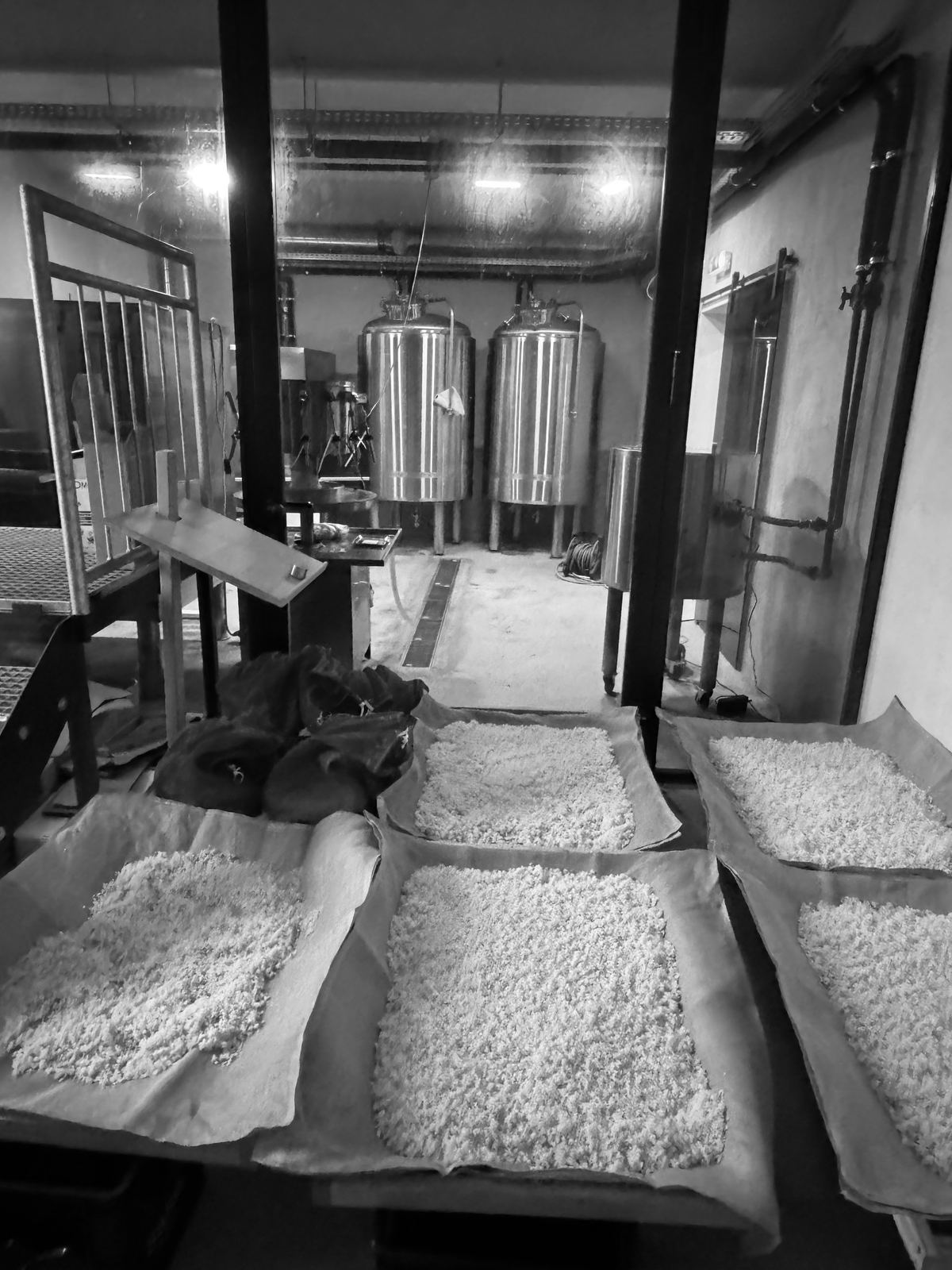
Arborio from Piemonte, a day’s drive south of us – the same delivery that feeds the rest of the kura.
Three to five years in a cool cellar, tasted through and left alone. It is the one part of brewing where the work is not doing anything.
The kappa is the river creature of Japanese folklore – a trickster who lives in the water and is said to be very old indeed. It seemed the right animal for the bottle that has been down in the cellar the longest.
Cellar temperature in a small glass, or gently warmed. It has the weight to sit where an oloroso would, and it is very good with hard cheese and walnuts.
Less than the colour suggests. Ageing concentrates the rice sweetness but brings nuttiness and savouriness with it. Closer to an oloroso than to a dessert wine.
01
16% vol – a little above our fresh bottles, which is part of why it ages as well as it does.
02
Because there is not much of it, and because a bottle this concentrated is poured in small glasses over several evenings rather than finished in one.
03
Cool, upright and dark. Unopened it keeps for years more; opened, treat it like a fortified wine.
04
At the kura on Barmherzigengasse, and in the INSIDE SAKE masterclass when there is a bottle open.
05
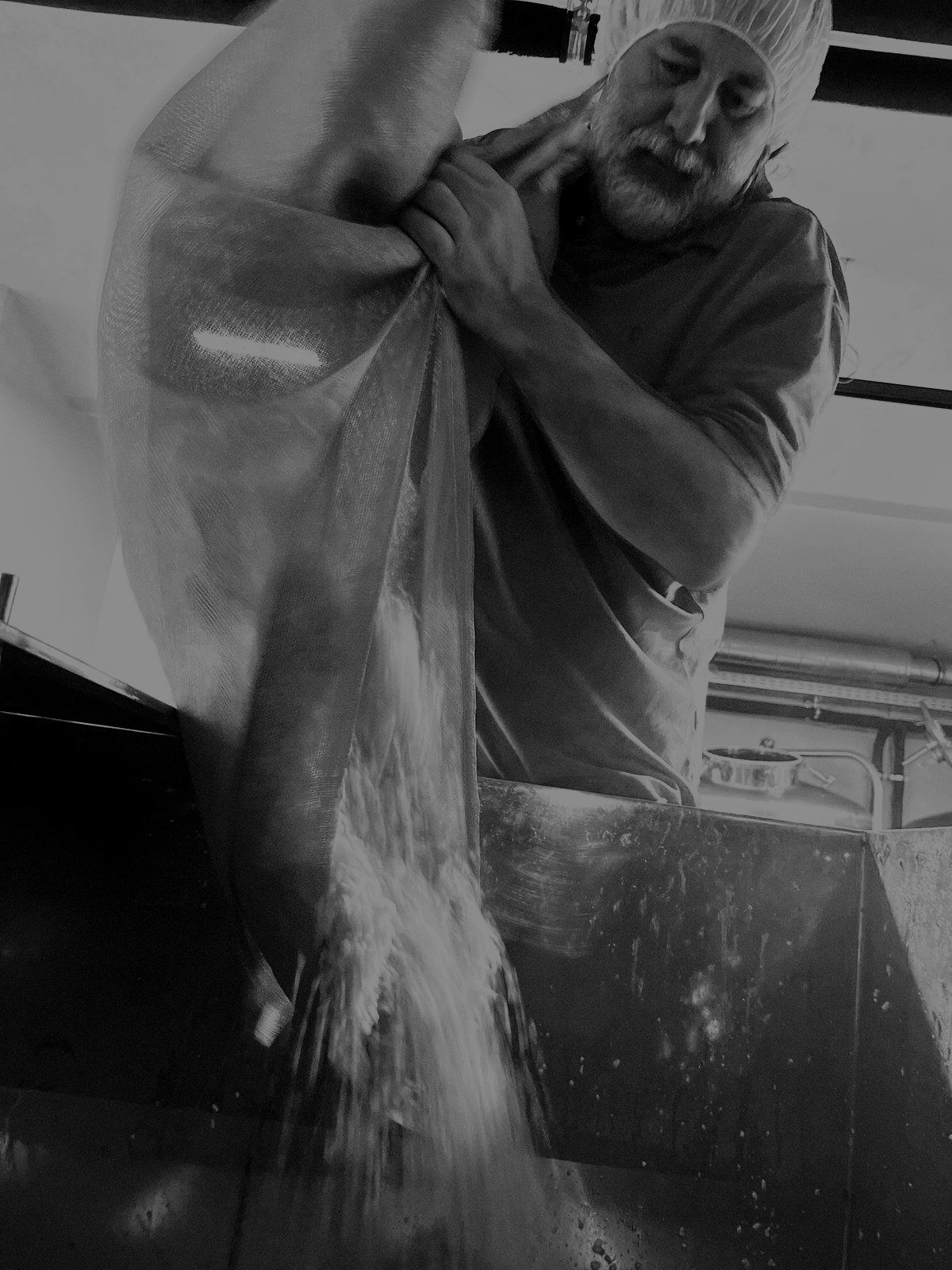
Every step – steaming, koji, fermentation, pressing, bottling – happens by hand in our brewery in Vienna.
06