
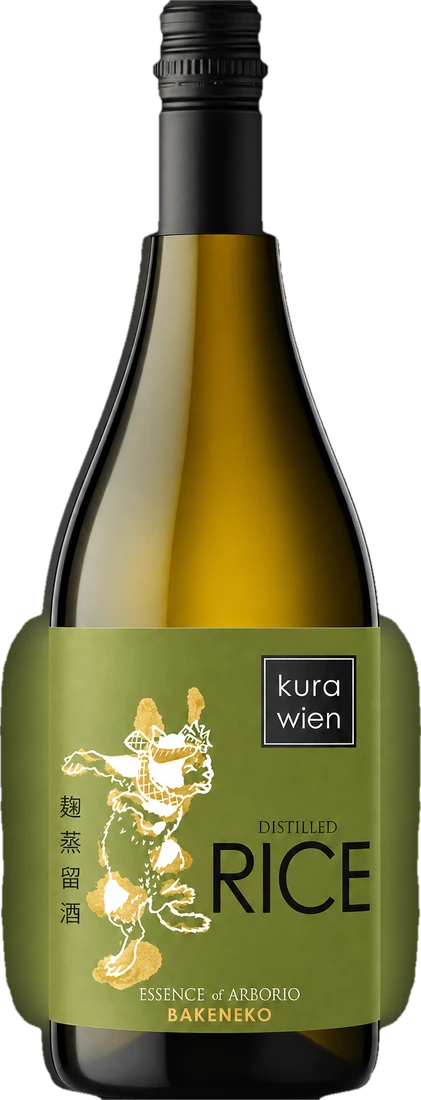
Bakeneko
Our own distillate, drawn from the kasu the press leaves behind. Grappa del Arborio, if you like – a rice spirit made the way a grappa is made, from what is usually thrown away.
Steamed rice and kōji come through clean and sweet, with the lactic edge of fresh kasu behind them. Clear, warm and unaged, and the strongest thing we make by a distance.
Total
€0.00
incl. 20% VATAll prices incl. 20% VAT · free shipping in Austria on orders over €90
What’s inside:
Steamed rice, kōji and a lactic freshness off the kasu, with a faint white-flower top note. Dry, clean and warming, with the rice sweetness arriving late.
Ingredients: distillate of sake kasu (water, rice, kōji – Aspergillus oryzae – yeast). 40% vol. 0,375 l. Vegan. Contains alcohol.
Neat and cold from the freezer in a small glass, the way a grappa is drunk, or long over ice with soda and a twist of lemon. At 40% it also does the job a spirit does in a cocktail – it stands in for vodka or shochu without disappearing.
Store upright and away from light. At 40% it is stable indefinitely and needs neither the fridge nor hurry – an open bottle keeps for years.
Contains alcohol. Sold only to persons 18 and over. Please enjoy responsibly.
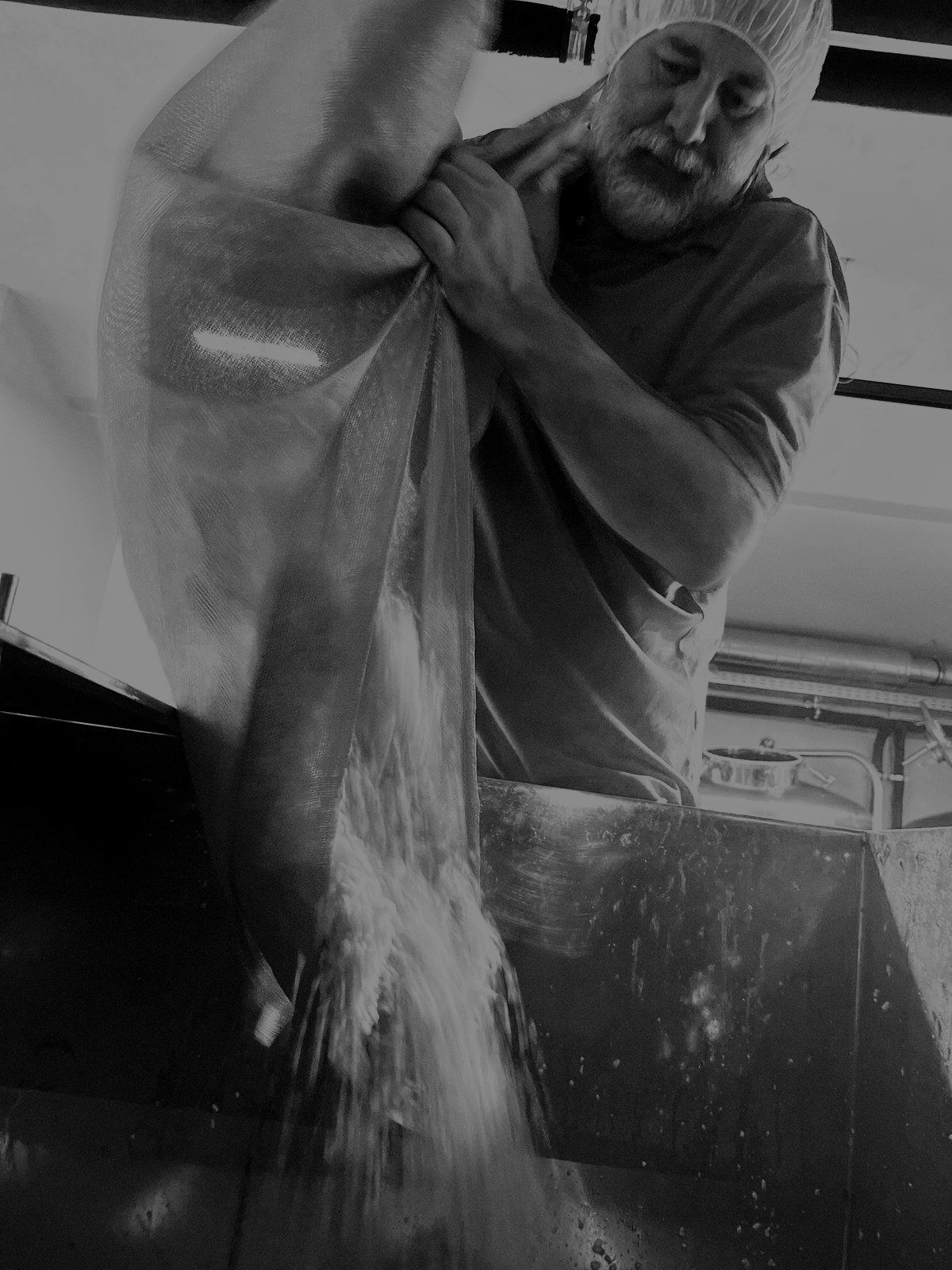
When the moromi goes through the press, roughly a quarter of it stays behind as kasu – rice solids still full of kōji, aroma and a little alcohol. Most of ours goes to bakers and cooks. The rest goes to the still.
Distilled once, in small batches, and bottled without ageing or sweetening. The Italians do this with grape pomace and call it grappa; this is the same idea with Arborio rice, which is why we call it the grappa del Arborio.
A brewery that throws away a quarter of what it makes is not a brewery we want to run. The kasu becomes bread, ice cream, marinade – and this.
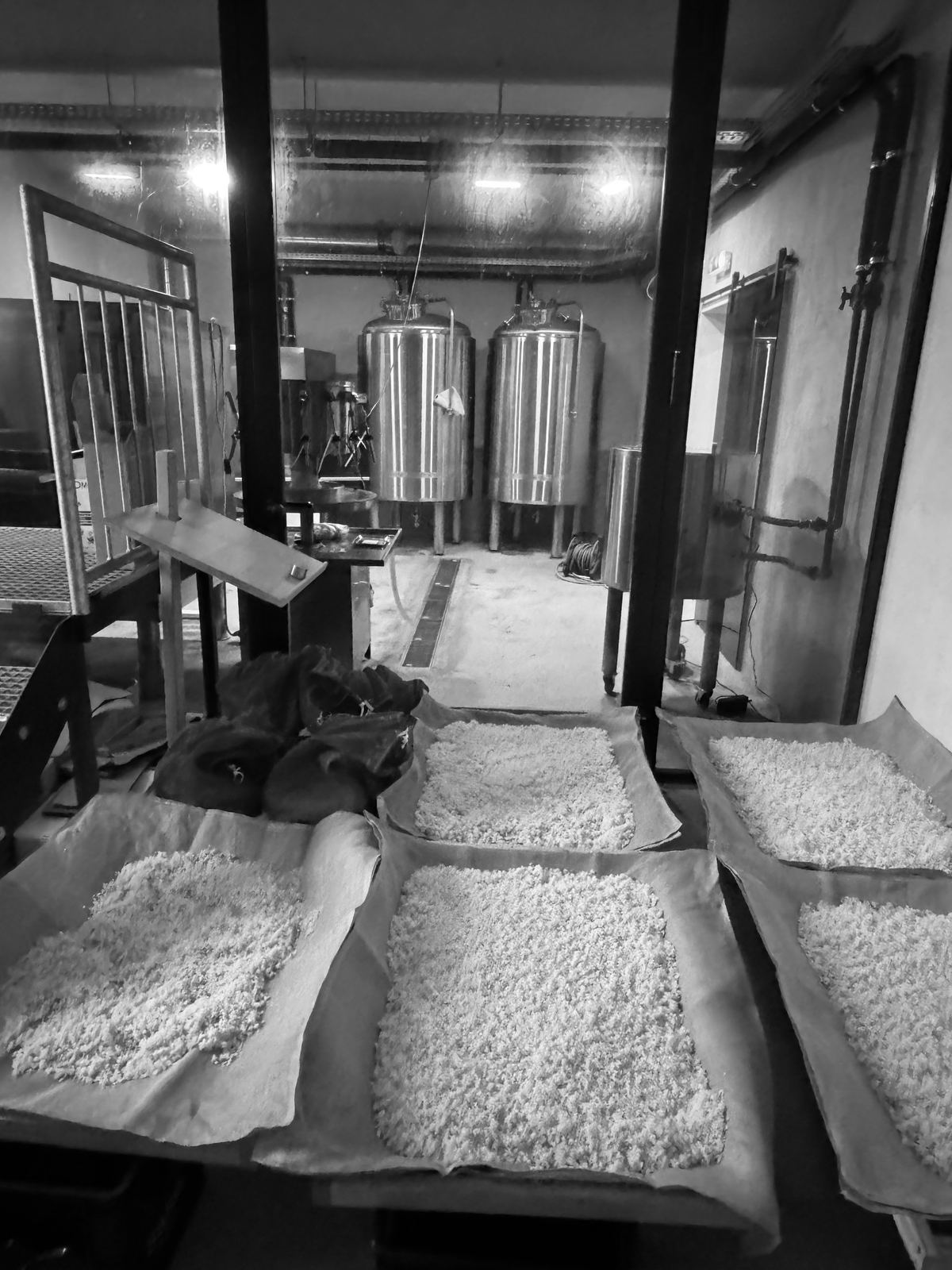
Arborio from Piemonte, a day’s drive south of us – the same delivery that feeds the rest of the kura.
Pressed the same week it is distilled. Kasu goes stale quickly, and everything good about this bottle is in how fresh it was when it went into the still.
The bakeneko is the cat of Japanese folklore that lives long enough to change shape and start walking on two legs. It seemed the right animal for something that began as a leftover and came back as a spirit.
Cold from the freezer in a small glass, or long over ice with soda and lemon. At 40% it also does what a spirit does in a cocktail, and it does not disappear into one.
No. Sake is brewed; this is distilled from what is left after the sake is pressed. In Japan the category is kasutori shōchū.
01
40% vol – roughly two and a half times our sake, so pour it accordingly.
02
Because a quarter-litre of kasu makes very little spirit, and because at this strength a bottle lasts a long time.
03
Upright and out of the light. At 40% it does not spoil, opened or not.
04
At the kura on Barmherzigengasse, and in the INSIDE SAKE masterclass when there is a bottle open.
05
The sake behind it is brewed and pressed by hand on Barmherzigengasse. The kasu is distilled for us in Austria and bottled here.
06